Vitamin D is more important than you think
Last updated: 9 Dec 2025
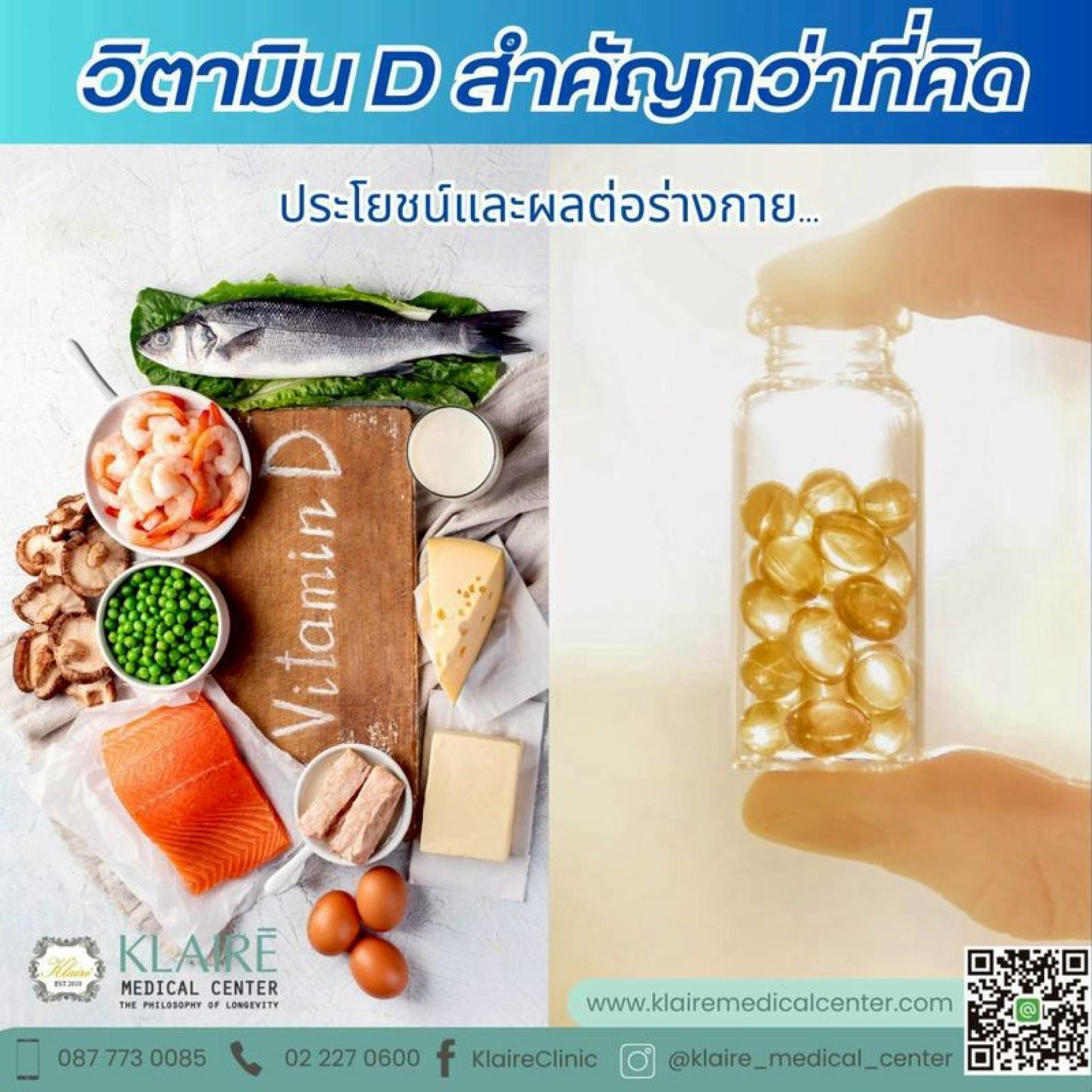
Most people know and are familiar with vitamins C, A, or E, but did you know that Vitamin D is also very important to your body?
️Vitamin D (Calciferol) consists of a group of fat-soluble cecosterols. There are 2 main forms:
️Vitamin D2 (Ergocalciferol) found in plants and yeast. The body cannot synthesize it on its own.
️Vitamin D3 (Cholecalciferol) found in fish oil and egg yolks. And the body can synthesize it in the skin.
Both types of vitamin D remain inactive in the body until they are converted into active forms in the liver and kidneys.
️ The role of vitamin D
️ Who is at risk of vitamin D deficiency?
️ Low vitamin D can be treated by giving vitamin D in the form of a dietary supplement that adjusts the dosage to the individual (Customized supplement) which is either oral or injectable. Depending on the needs of each person which the doctor will choose as appropriate. This makes the treatment more effective compared to buying vitamins to take yourself.
Additionally, you should find time to go out and expose the sunlight for 10-15 minutes a day to stimulate your body to naturally synthesize vitamin D.
️Vitamin D (Calciferol) consists of a group of fat-soluble cecosterols. There are 2 main forms:
️Vitamin D2 (Ergocalciferol) found in plants and yeast. The body cannot synthesize it on its own.
️Vitamin D3 (Cholecalciferol) found in fish oil and egg yolks. And the body can synthesize it in the skin.
Both types of vitamin D remain inactive in the body until they are converted into active forms in the liver and kidneys.
️ The role of vitamin D
- ️ Helps with the absorption of calcium and phosphorus in the intestines.
- ️ Helps use calcium to build bones and teeth.
- ️ Makes bones strong. Helps prevent osteoporosis.
- ️ Stimulates the immune system in the body. Reduce the risk of infection.
- ️ Balancing the immune system, reducing the occurrence of Autoimmune disease.
- ️ Helps with the functioning of certain hormones.
- ️ Helps control blood sugar levels.
- ️ Helps control blood pressure and reduce the risk of cardiovascular disease.
- ️ Reduce the risk of certain types of cancer.
- ️ Stimulates the secretion of senotonin in the brain. Helps sleep, reduces stress, reduces depression.
️ Who is at risk of vitamin D deficiency?
- ️ Elderly people (efficiency in vitamin synthesis decreases)
- ️ People with liver disease or kidney disease (the main source of synthesis has problems causing insufficient production)
- ️ People with diabetes
- ️ People who are overweight
- ️ People who rarely expose the sunlight
- ️ People who are vegetarians
️ Low vitamin D can be treated by giving vitamin D in the form of a dietary supplement that adjusts the dosage to the individual (Customized supplement) which is either oral or injectable. Depending on the needs of each person which the doctor will choose as appropriate. This makes the treatment more effective compared to buying vitamins to take yourself.
Additionally, you should find time to go out and expose the sunlight for 10-15 minutes a day to stimulate your body to naturally synthesize vitamin D.
*** Copyright by M.D. Health and Beauty co,.ltd.
Related Content

Heavy metal accumulation causes poisoning and affects various systems of the body, which may also cause further chronic diseases. The most important thing is to avoid any risk factors.
28 Oct 2025

Dementia is a condition in which brain function decreases due to brain cells deteriorating or being destroyed. This causes the brain cells' ability to communicate with each other to deteriorate, becoming stuck and not smooth, causing an impact on lifestyles and careers.
28 Oct 2025
